
Framework
V3 + DiMe
Verification · analytical · clinical
Documentation
End-to-end
Methods, evidence, version history
Submission
Supported
IND · IDE · NDA · BLA · MAA
Regulatory Endpoint Workflow
Define → Validate → Document → Submit
A regulatory-ready digital endpoint is one whose method, validation, and provenance are documented end-to-end — to a level that supports its inclusion in a regulatory submission. The phrase is not about the device, the vendor, or the dashboard. It is about the paper trail.
Regulatory readiness is a property of the documentation — not the device.
Related pages: Validation · Digital Endpoints
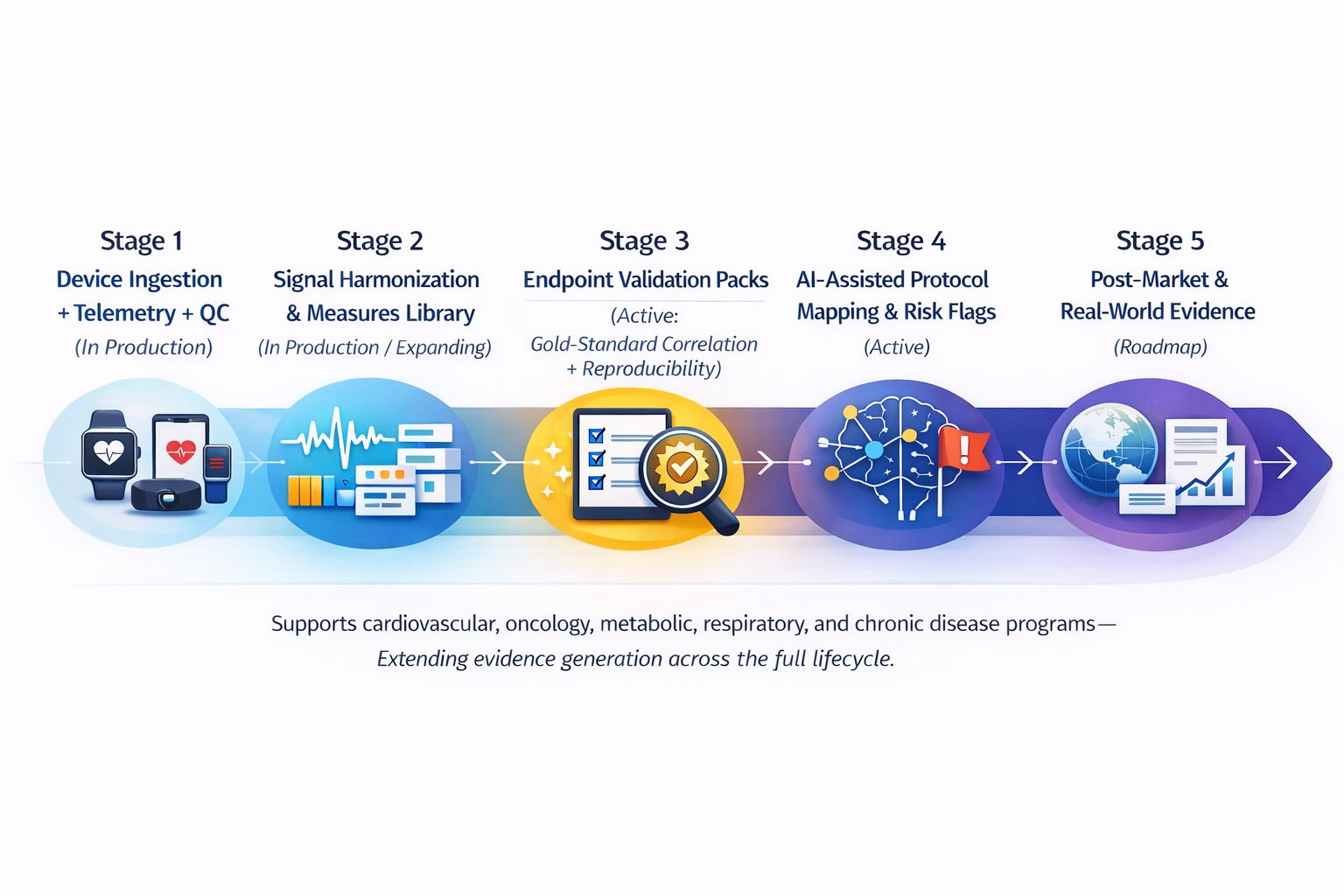
Most digital endpoint submissions stall not because the underlying technology is unsound, but because the validation evidence is missing, partial, or not packaged in a reviewable way.
Reviewers can't accept a metric they can't explain. Opaque vendor algorithms are a hard stop.
Verification done; analytical validation thin; clinical validation absent. Submissions need all three.
An algorithm that changes silently mid-study leaves reviewers unable to trust comparisons over time.
Values arriving without device, firmware, and algorithm-version context can't be re-analyzed.
Strong validation against the wrong clinical question doesn't help the submission.
Documentation written after the trial is harder to defend than documentation built alongside it.
Submission readiness is something you build in from the beginning — not bolt on at filing time.
We don't replace your regulatory team — we give them an organized, defensible package.
Endpoints that hold up under review are packaged for review — not just collected.
When the package is organized, the conversation with reviewers stays focused on the science.
See related pages: Security & Privacy · Validation · Endpoint APIs
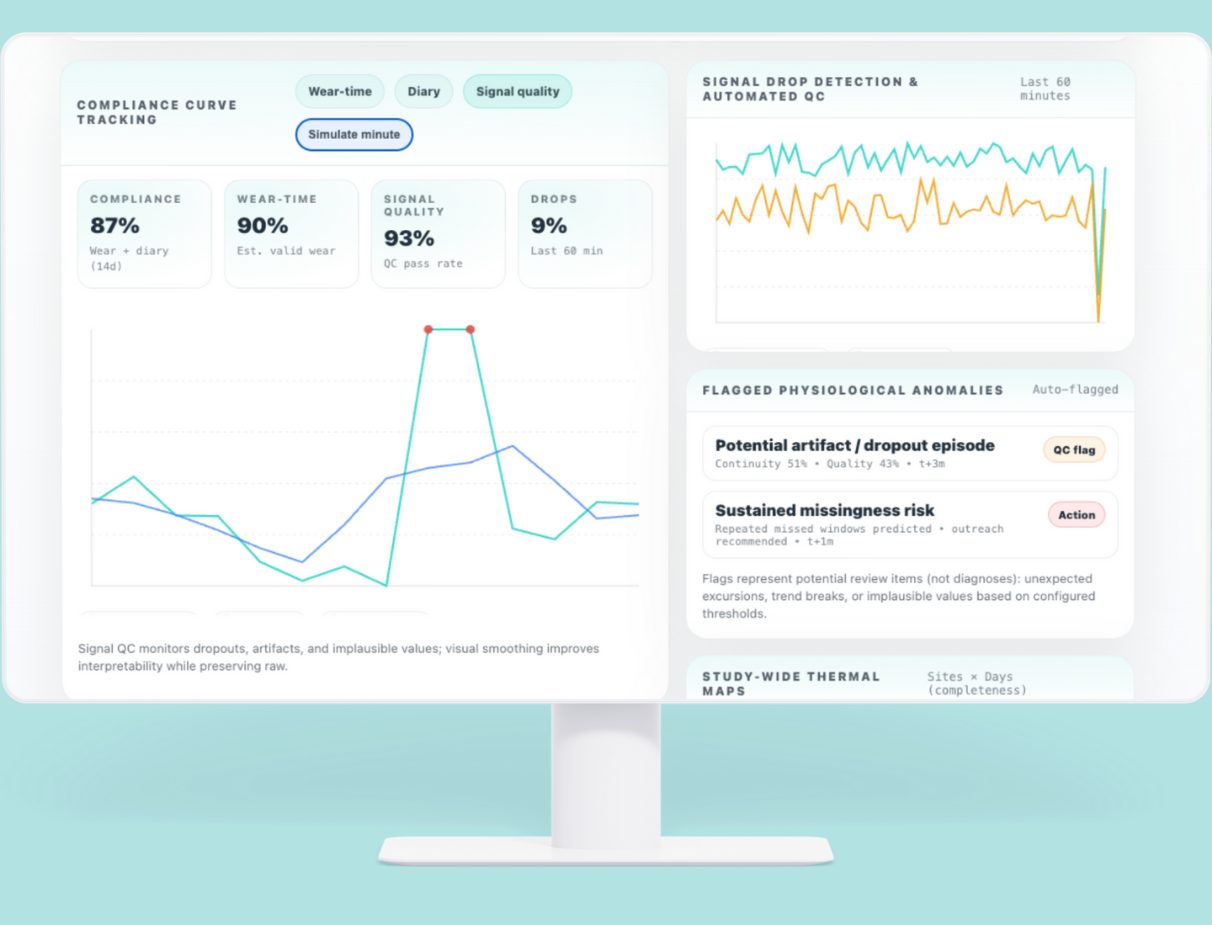
Delve tracks the frameworks reviewers actually use — and updates validation patterns as those frameworks evolve.
Methodology aligned with current FDA guidance for digital health technologies in clinical trials.
Endpoint methods take EMA qualification opinions and scientific advice into account.
Verification, analytical, and clinical validation patterns follow the Digital Medicine Society V3 framework.
Electronic records and signatures handled in a 21 CFR Part 11-compliant infrastructure.
Endpoint operations follow ICH GCP principles for clinical investigation.
Immutable audit trail, scoped access, and documented procedures for inspections.
We support — we don't replace — your regulatory team. The submission still belongs to your filers.
Acceptance is decided per submission. What Delve provides is a documented, defensible package that contains the evidence reviewers ask for. Your regulatory team owns the submission strategy.
Consumer 'validation' typically refers to the sensor. Regulatory-ready digital endpoints require validation of the full chain — sensor, algorithm, and clinical meaning — documented in a way reviewers can audit.
Yes. We'll join pre-submission meetings or sponsor briefings to walk through the digital endpoint package if that helps your regulatory team.
Delve develops digital endpoints with the documentation, validation, and version control that submission teams need from day one.
Book a Regulatory Discussion