
API model
REST + Webhooks
Pull on demand or stream as events
Output formats
CDISC / Parquet / JSON
Submission-ready and analytics-ready
Security
OAuth 2.0 + RBAC
Study-scoped tokens, full audit log
Endpoint API Workflow
Request → Authenticate → Stream → Reconcile
In clinical trials, an endpoint API is the layer that exposes harmonized, validated digital endpoints to the systems that need them — EDC, statistical environments, analytics pipelines, and regulatory submission packages.
Endpoint APIs are how harmonized digital data actually makes it into the downstream environments your statisticians, monitors, and regulators rely on.
Related pages: Digital Endpoints · Signal Harmonization

Most consumer or vendor APIs were not designed for clinical research. They deliver the numbers — but not the context regulators and statisticians need.
Vendor APIs hand you sensor data. The trial actually needs harmonized endpoints aligned to the protocol.
Values arrive without device, firmware, or algorithm-version context — leaving review teams unable to reproduce results.
Consumer APIs change frequently. A clinical pipeline can't absorb breaking changes every quarter.
Quality flags from the device are dropped before the data reaches downstream systems.
Shared keys, no scoping, no role separation — not acceptable for regulated data.
When a value changes, there's no clean way to know what changed and when.
Endpoint APIs for clinical trials need to behave like clinical software, not like a public consumer API.
Delve treats endpoint delivery as part of the trial — not as a side-channel data dump.
Endpoint APIs that survive contact with EDC, statistical environments, and regulators are built around clinical workflows — not just data transport.
Strong endpoint APIs let your statistical and regulatory teams trust the data the moment it arrives — without round-trip questions about lineage.
See related pages: Analytics · Security · Regulatory-Ready Endpoints
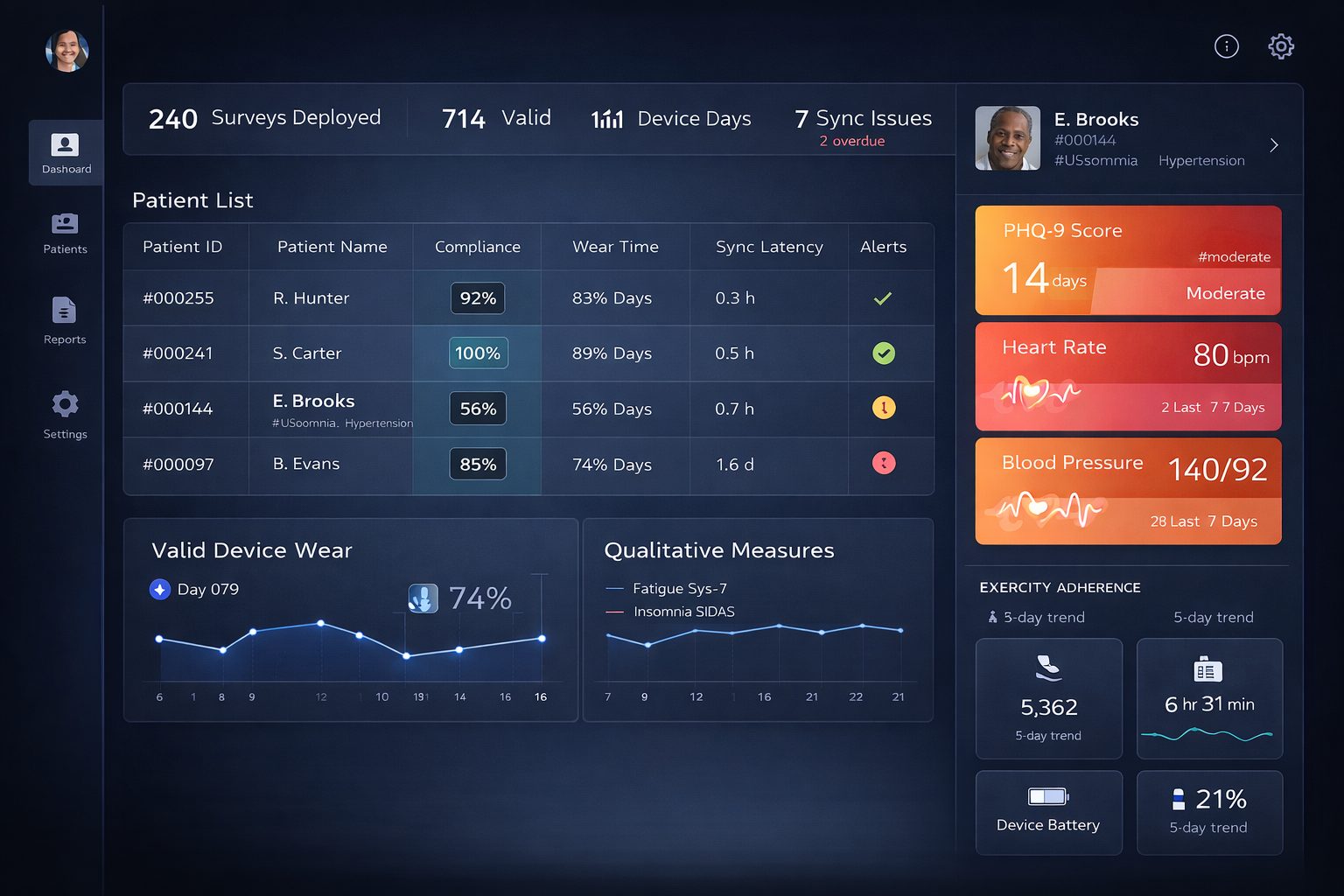
Once your digital endpoints are flowing through an endpoint API, every downstream consumer — EDC, statistical environment, monitors, regulators — gets the same source of truth.
Endpoints arrive in EDC in the form your data managers expect, with the provenance fields they're used to seeing.
Parquet / CDISC packages drop straight into SAS, R, or Python environments without manual reshaping.
Submission-ready packages bundle endpoint values with their validation evidence and version history.
Webhook streams power live dashboards for medical monitors and clinical-ops teams.
Every analytical run can be re-executed against the exact endpoint version that produced the original result.
Immutable access logs and versioned schemas mean every data movement is traceable for an audit.
Endpoint APIs are how the harmonization, QC, and validation work in Delve actually pays off in your trial's downstream systems.
Yes. We support REST pull, scheduled batch export, and webhook push into EDC systems — with the schema, units, and provenance fields your data team needs.
Endpoint API contracts are versioned. New versions are published with documented changes and a deprecation period; existing integrations keep working on the version they were built against.
Authentication is OAuth 2.0 with study-scoped tokens. Role-based access controls limit who can read which endpoints. Every access is logged in an immutable audit trail.
Delve combines harmonization, validation, and endpoint APIs into one operational model so EDC, statisticians, and regulators all see the same source of truth.
Book an Endpoint API Discussion