
Wear-time
Decays
Predictably, in 3 phases
Risk window
Month 3
Plateau phase begins
Recovery method
Human
Outreach at key risk points
Wearable Compliance Model
Monitor · Detect decay · Intervene early
Most teams focus the majority of their wearable operational planning on onboarding. Device selection, training materials, shipment logistics, and initial setup get careful attention. What gets less attention is what happens between month two and month twelve.
Wearable wear-time in clinical trials declines over time in a pattern that is remarkably consistent across studies and device types. Patients who start with strong compliance gradually reduce their usage — not dramatically, but steadily — until the data stream becomes too sparse to support the endpoints it was meant to protect.
The three phases where this happens are predictable enough that study teams can build for them. The problem is most don't.
See also: Wearables & Digital Endpoints · Signal Quality Control
Each phase has a distinct cause — and a distinct intervention. Understanding which phase you are in changes what you do about it.
The biggest drop often happens in the first weeks. Patients struggle with setup, charging, Bluetooth pairing, or simply forget to put the device back on after removing it. Without structured onboarding support and early compliance monitoring, this friction becomes a habit of non-wear.
The novelty is gone. Patients are no longer actively engaged with the device as something new. Compliance drifts without a triggering event. This is the hardest phase to address because the signal is subtle — slightly shorter wear windows, occasional missed nights — before it becomes a clear gap.
Physical fatigue with device wear — skin irritation, comfort issues, charging burden — combines with general study fatigue. Patients who have been in a study for six months are less motivated than they were at baseline. Re-engagement requires something more than a reminder.
Hardware issues — battery degradation, sensor malfunction, firmware failures — create data gaps that look like patient non-compliance but aren't. Without device-level monitoring, these go undetected until data lock.
A patient can wear a device consistently and still generate no usable data if sync is broken. Bluetooth dropouts, app updates that break connections, and phone storage issues all cause silent data loss that wear-time monitoring alone won't catch.
When wearable wear is one of many study tasks — eDiaries, clinic visits, additional devices — the cumulative burden accelerates decay in all streams. Protocol design that minimizes burden stacking protects long-duration compliance.
The intervention that works at each phase is different. Generic reminders help at the margin but don't address the root cause of each type of decay.
Related: Concierge-as-a-Service™ · Patient Support
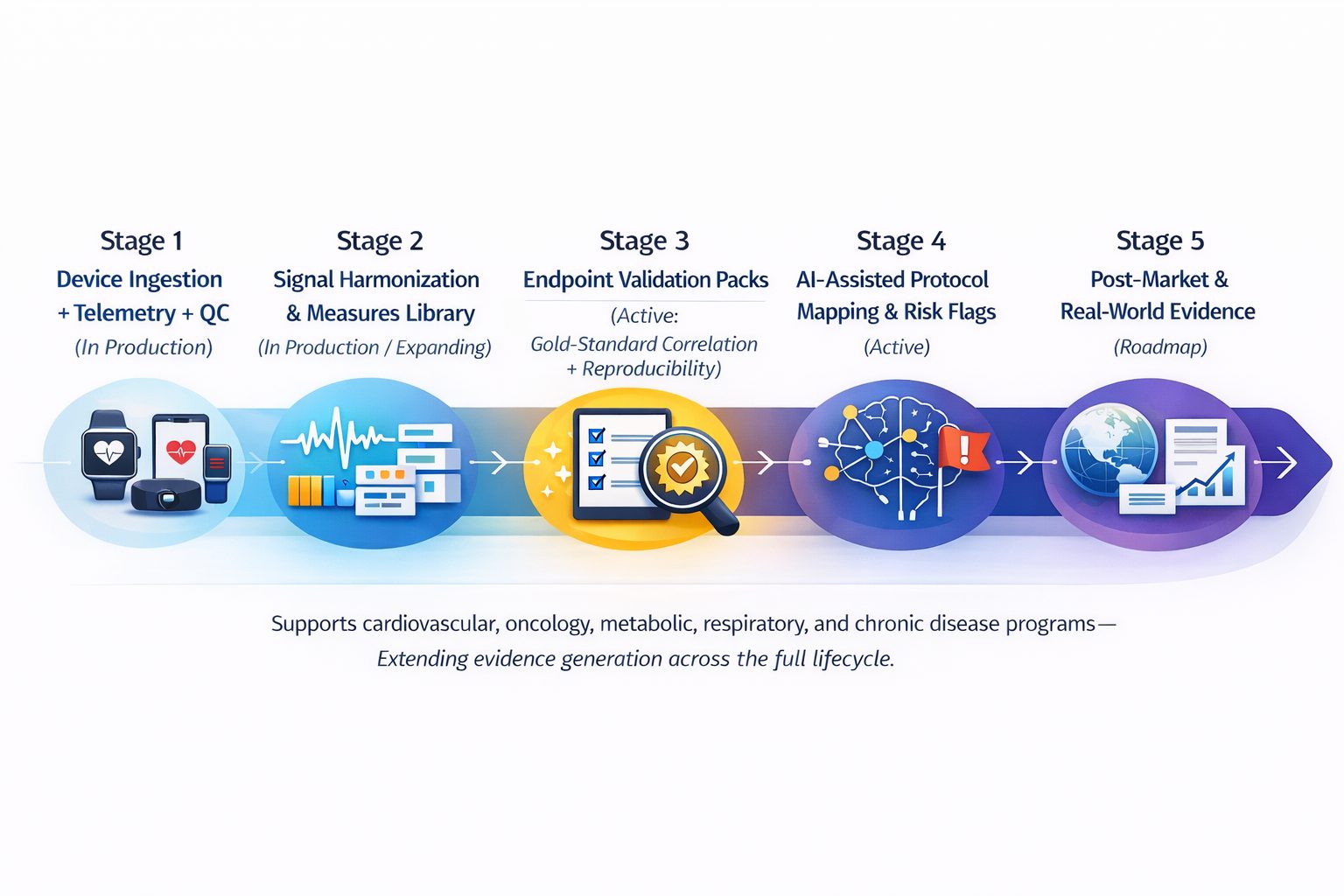
Studies exceeding three months consistently show meaningful wear-time decline without active intervention. The risk increases substantially at six months and beyond. Protocol planning should assume decay and build counter-measures for each phase.
Monitoring is necessary but not sufficient. Alerts without a rapid human response layer — whether site staff or a concierge service — do not protect endpoints. The gap between alert and intervention is where data is lost.
Recovery depends on the cause. Device issues require hardware intervention. Motivation decline requires human re-engagement. Late fatigue may require protocol-level accommodation. Recovery is possible in most cases if the cause is correctly diagnosed and addressed quickly.
Delve builds wear-time monitoring, signal QC, and phase-specific concierge support into every wearable program — so compliance is protected across the full study arc, not just at enrollment.
Talk About Your Study