
Data gap risk
Between visits
Where cardiac events actually happen
Key endpoints
HRV · ECG
SpO₂ · Activity · PRO
Study length
6–24 mo
Wear-time decay is a known risk
Cardiology Monitoring Model
Continuous · Monitored · Recovered
Clinic visits in cardiology trials are anchors, not the primary data collection window. For most cardiovascular endpoints — functional capacity, symptom burden, heart rhythm patterns, quality of life — the data that matters accumulates between visits, during the patient's daily life.
This is well understood in principle. The operational challenge is executing continuous between-visit data collection across multi-month studies without the data quality degrading as the study progresses. Wear-time decay, device technical failures, and the logistical reality of daily device use over 12 to 24 months all erode the data stream that the study depends on.
The teams that protect cardiology digital endpoints treat between-visit data quality as an operational problem, not just a patient compliance problem. The intervention model needs to match where the failures actually occur.
See also: Cardiology Trials · Wearables & Digital Endpoints
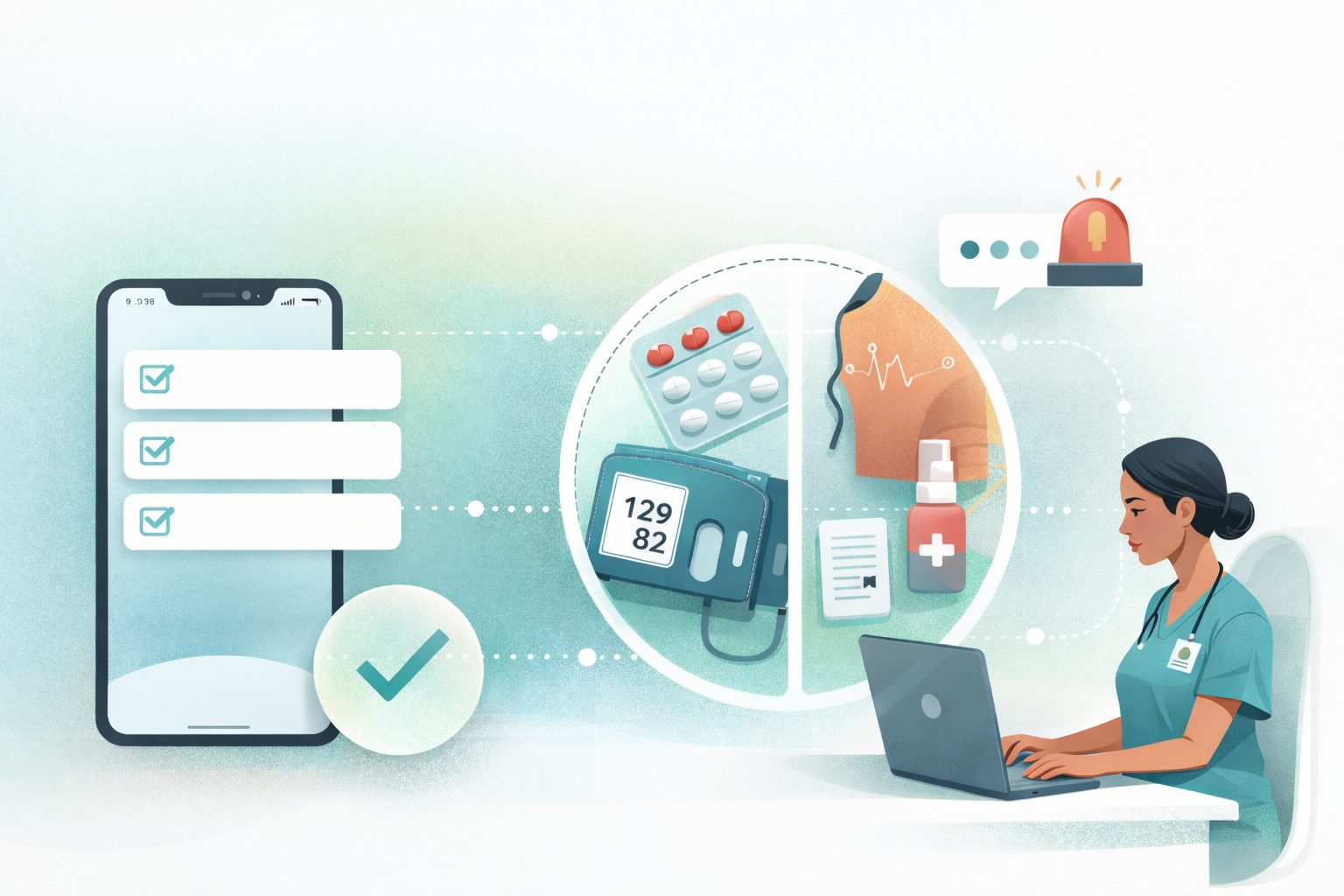
Understanding the specific failure modes in cardiovascular wearable studies shapes the monitoring and intervention model that protects endpoint data.
Patients remove devices for showering, sleeping comfortably, or during exercise and don't always replace them immediately. In long cardiology studies, these small daily gaps accumulate. Regular wear-time monitoring with defined thresholds triggers outreach before gaps compound into days of missing data.
Optical sensors for PPG-based HRV and SpO2 are sensitive to placement and skin contact quality. Patients who wear devices loosely or in positions that reduce sensor contact generate technically complete records with degraded signal quality — which may only be identified at analysis.
Functional capacity endpoints based on activity level require that the patient's activity is actually representative of their capacity, not just what they happened to do. Confounders — illness, bad weather, visitor days — create activity data that reflects circumstance rather than function.
Symptom diaries and quality of life instruments in cardiovascular studies often have specific completion windows relative to clinical events or visit dates. Late completions reduce analytic validity. Proactive reminders and compliance monitoring specific to completion windows are needed.
Battery degradation, firmware updates, and Bluetooth connectivity failures all create silent data gaps in long studies. Without device-level health monitoring that alerts the team when a device has stopped generating data, these failures are discovered late.
Patients who have been wearing a device for 18 months are significantly less motivated than at enrollment. Studies that do not build end-of-study retention mechanisms lose disproportionate data in the final months — often the most important period for endpoint assessment.
Common devices include medical-grade wrist-worn devices (Polar, Withings), patch ECG monitors (iRhythm Zio, BioTelemetry), and FDA-cleared activity monitors. Selection depends on the specific endpoint — ECG-grade arrhythmia detection requires a different device category than general activity or HRV monitoring.
HRV (heart rate variability) measures the variation in time between heartbeats and is an indicator of autonomic nervous system function. In cardiology trials, it is used as an objective marker of cardiac stress, recovery, and treatment response. Accurate HRV requires continuous wear with consistent sensor contact.
This depends on the endpoint. Continuous real-time ECG is required for studies detecting arrhythmia frequency or onset timing. Extended Holter monitoring (2-4 weeks) may be sufficient for studies characterizing rhythm patterns. The protocol should specify monitoring duration and data requirements before device selection.
Delve provides wearable integration, continuous compliance monitoring, and concierge support for cardiovascular studies — protecting the endpoint data that accumulates between visits.
Talk About Your Cardiology Study