
Platform vs execution gap
Critical
Where most studies lose completion rate performance
Completion with execution model
92–98%
What active support achieves vs passive platforms
Unified approach
Both layers
Delve operates collection and execution together
Collection + Execution Layer
Capture → monitor → support → protect
What Separates eCOA From Clinical Trial Compliance
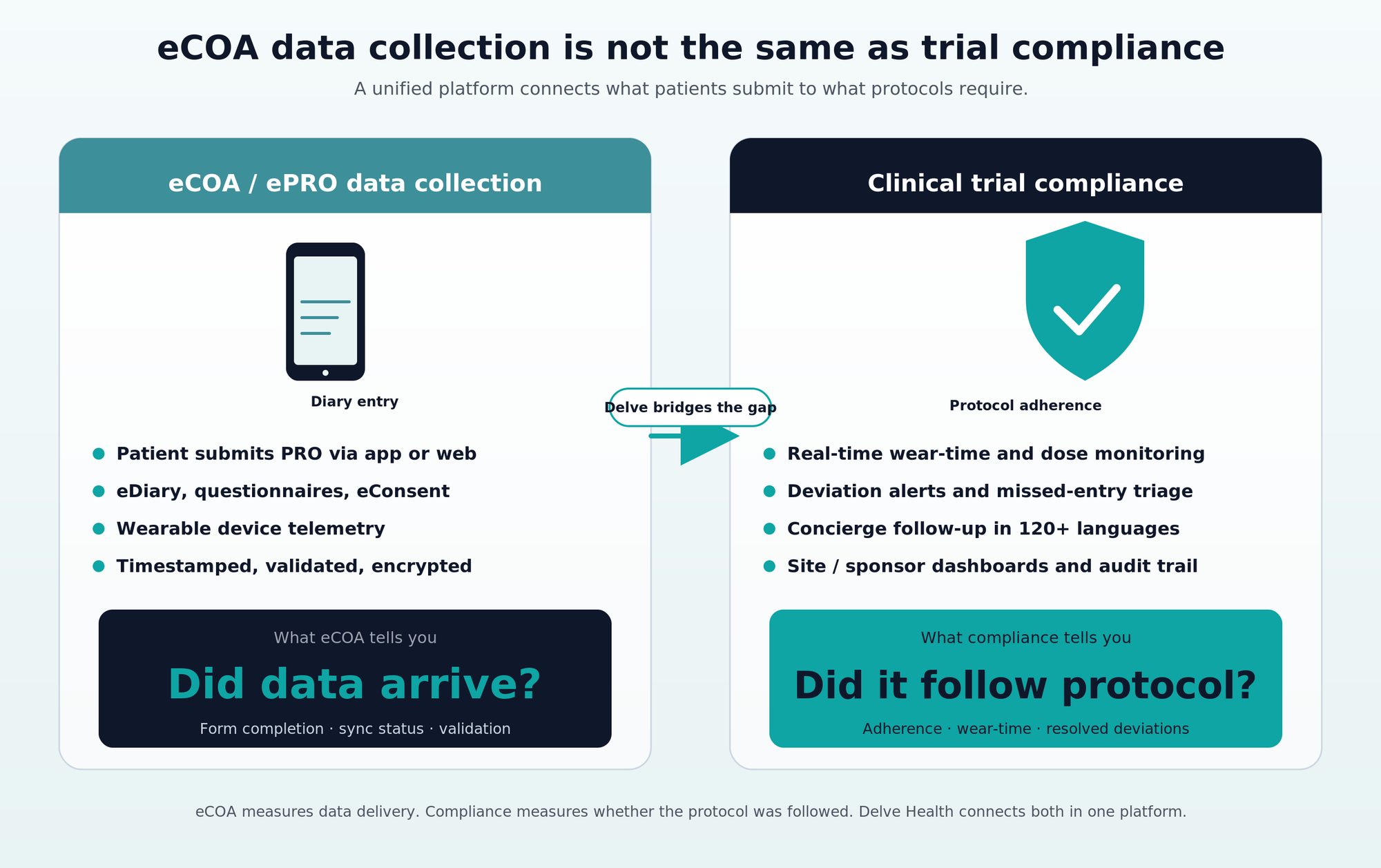
eCOA is a data collection mechanism. It provides the structure, interface, and regulatory validation for capturing patient-reported and clinician-reported outcomes. It is necessary but not sufficient for compliance.
Clinical trial compliance is the operating state that determines whether participants actually use the eCOA platform as required, across the full study duration, with sufficient completeness to support endpoints.
The distinction matters because they require different investments.
- eCOA investment: platform selection, validation, configuration, site training, and IT deployment
- Compliance investment: patient support, outreach workflows, issue escalation, site burden reduction, and recovery infrastructure
Most budgets are heavily weighted toward the former. Most completion rate problems originate in the latter.
Why Studies Fund the Platform and Lose the Completion Rate
The pattern is common. A study deploys a well-validated, user-friendly eCOA platform and then watches completion rates settle at 75-80% rather than 90% or above. The platform is not the problem. The execution model is.
- No proactive outreach to catch declining completion before it becomes a trend
- No language support for participants who cannot navigate the app independently
- No device troubleshooting for studies that pair eCOA with wearables
- Site coordinators absorbing every support call, login issue, and technical question alongside clinical responsibilities
- No single team owning the participant experience end-to-end between site visits
Closing the gap does not require replacing the eCOA platform. It requires adding the execution layer that should have been designed in from the start.
A Compliance Platform vs an eCOA Platform: What to Expect From Each
When evaluating vendors, it helps to understand which function each one is actually designed to serve.
An eCOA platform provides:
- Validated data capture for patient-reported outcomes
- Multi-language interface configuration
- Regulatory compliance for 21 CFR Part 11 and comparable frameworks
- Dashboard visibility into completion rates and missing data
A compliance execution layer provides:
- Proactive outreach when participants fall behind
- Human support to resolve confusion, language barriers, and device friction
- Recovery workflows that close the gap between missing data and restored completion
- Site burden reduction so coordinators are not the primary compliance enforcement layer
- Wearable monitoring and integration that aligns device compliance with eCOA compliance
Delve Health provides both. Most sponsors currently buy an eCOA platform and then try to assemble the execution layer from internal teams, site effort, and separate vendors.
How Delve Bridges eCOA and Compliance
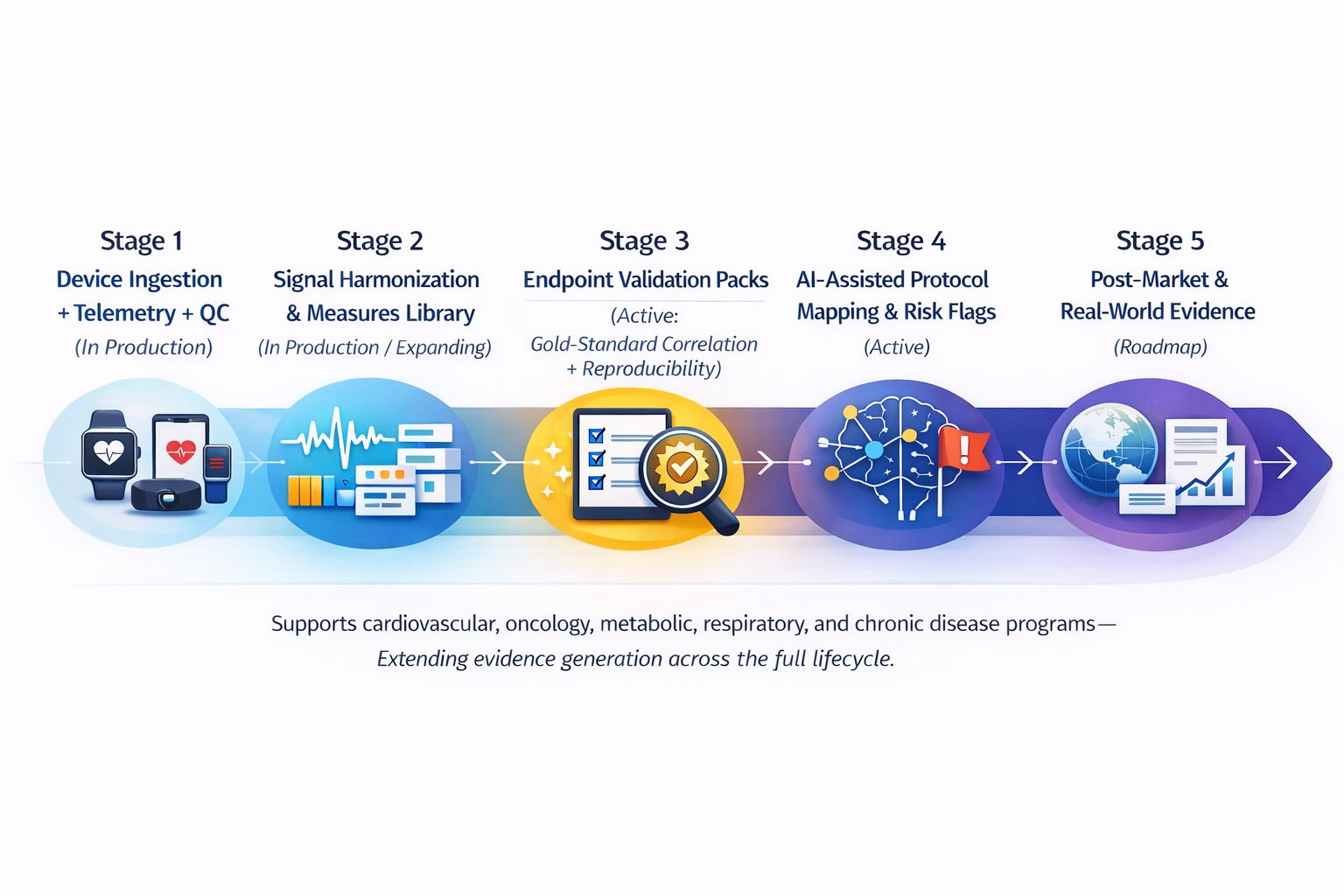
Delve integrates the collection layer and the execution layer so sponsors do not have to build the compliance model separately from the eCOA deployment.
eCOA & ePRO Platform
Validated, configurable data collection designed for completion, with built-in follow-up logic and support escalation pathways.
Execution Through Concierge
The human layer that converts platform visibility into action: outreach, recovery, and participant support in 120+ languages.
Compliance Visibility and Escalation
Real-time dashboards that connect data gaps to action triggers, not just compliance reports that arrive after the damage is done.
Site Enablement and Burden Reduction
Structured workflows that support site teams without placing the entire compliance responsibility on already stretched coordinators.
Frequently Asked Questions
What is the difference between eCOA and clinical trial compliance?
eCOA is a data collection mechanism. Compliance is the operational state that determines whether participants use that mechanism consistently and completely. Most platforms address collection; few address the execution layer that sustains compliance.
Why do studies with good eCOA platforms still have low completion rates?
Because eCOA platforms capture data but do not independently resolve the reasons participants stop completing assessments. Language barriers, protocol confusion, device friction, and study fatigue all require human intervention.
Is it possible to improve compliance without replacing the eCOA platform?
Yes. Adding a Concierge-as-a-Service layer, proactive outreach, site support, and wearable monitoring on top of an existing eCOA platform is often the fastest path to improving completion rates.
What is Concierge-as-a-Service in clinical trials?
Concierge-as-a-Service is Delve's model for providing proactive, multilingual patient support. It handles participant outreach, question resolution, device troubleshooting, and re-engagement workflows that platform automation cannot address.
Does Delve provide eCOA as a standalone platform?
Yes. Delve can deploy eCOA as a standalone platform or as part of a unified compliance execution model that includes Concierge, wearables, analytics, and site enablement.

The Collection Layer Is Not the Compliance Layer
If your eCOA completion rates are lower than they should be, the platform is probably not the problem. The execution model is. We can help you close the gap.
Close the Compliance Gap